Art

As we rise

“Plastic is a material widely recognized as a danger to our Earth, and yet, as the Pandemic took over, plastic entwined itself into every new norm in our lives quickly becoming the very material we would communicate through. Digital media removed our masks, a safe space behind a screen, showing us our voices cannot be stifled. Not now. Basic human rights have been ignored, and trampled upon, in crises. Access. Access to medicine, vaccines, equity, equality. Much like the plastics churning in the ocean, issues rose to the surface, swollen from pain, and humans chose to speak up. We stepped away from our screens and into the streets and we marched. We marched for our lives, for our rights, for love, and for equity. A new sun, toxic rays of light begging for attention. We cannot forget what we have gone through for change to happen. This virus, touches everyone, everything. Six feet apart. They stand, masked, determined, and even when they crumble, they won’t stop. They will never go away. Plastic.”

Love in All Colors

“I wanted to focus on LGBT acceptance, especially for people in families of color. I found that it’s more unlikely for people of color to accept the LGBTQ community, and their members of their family who might happen to be in it. In a perfect world, children would be accepted by their parents no matter their orientation or identity. Supportive families are the first step to acceptance in the greater world.”

The Mountains We Climb

“Adventurous outdoor activities fill me with the power to achieve any challenge. The different shades of purple represent how life isn’t just a black and white canvas, but there’s an endless variation of color. The variety of purple is my way of looking in between the shades of gray to find my joy, my drive, my power. The abundance of mountains at the bottom show how life comes with many struggles, but if we believe in our own self worth/power we can overcome them. There are endless possibilities when we feel empowered.”

Persevere on Top of Your Problems

“My painting shows that most life problems are like a mountain. But if you keep going, if you can manage to get on top of your problems, it’ll be worth it. And there is always someone in your life there to help.”

Freed

“This is an image of someone who wants to be freed from everyone else’s thoughts and what they have to say. I chose to do this project because that is how I was feeling and feel that someone always has something to say about my life and I am not allowed to think for myself. I hope this can help someone else as well.”

Reflections

“This image is of a reflection of what people see versus what I feel. I chose reflection because if you look at what people think about you, then you realize that the negative thoughts you are thinking about yourself are really not that bad. I like that this image may give others hope and allow them to overcome what they may be going through.”

Peace of Mind

“I chose the word ‘Serenity.’ It means ‘the state of being calm, peaceful, and untroubled.’ My project symbolizes having peace of mind or calming one’s mentality.”

Drowned Words

“The word I chose to convey was ‘communication.’ Mental struggles can be alleviated through other people’s help, but in order for an individual to receive the help they need, their thoughts and feelings must first be declared. Adolescents are often told to reach out for help, but in reality, asking for help can be a very difficult and muddled process. In my painting, a girl is being dragged down by a tangible manifestation of those restricting factors in the form of blank, white masses. To better help the youth of today, I would like to see more receptive and accepting adults that can offer genuine aid to those inflicted with mental illnesses. Adolescents should not have their words drowned out; they must be heard in order to be helped.”

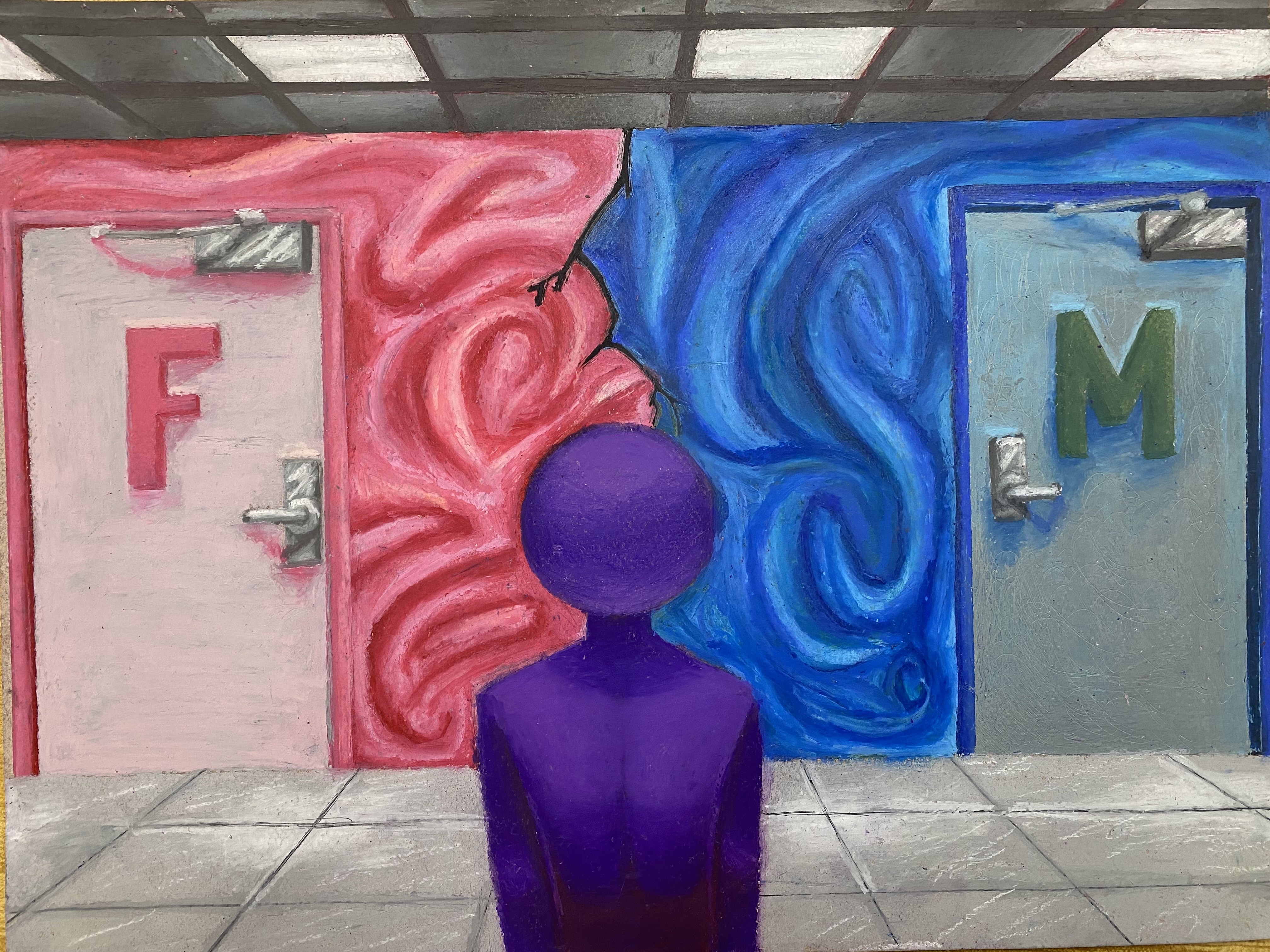
Cracks of Boundary

In this artwork, I aspire to instill a feeling of hope; as although the figure is presented with limited categories to force themself into, they still chose to be themself. I dually aim that this instills hope amongst those who have been faced with a similar scenario, who feel alone in their struggles. I hope those who do not struggle with such issues feel a call to action—to emotionally support those struggling and help the reform of gender & gender norms within our society.

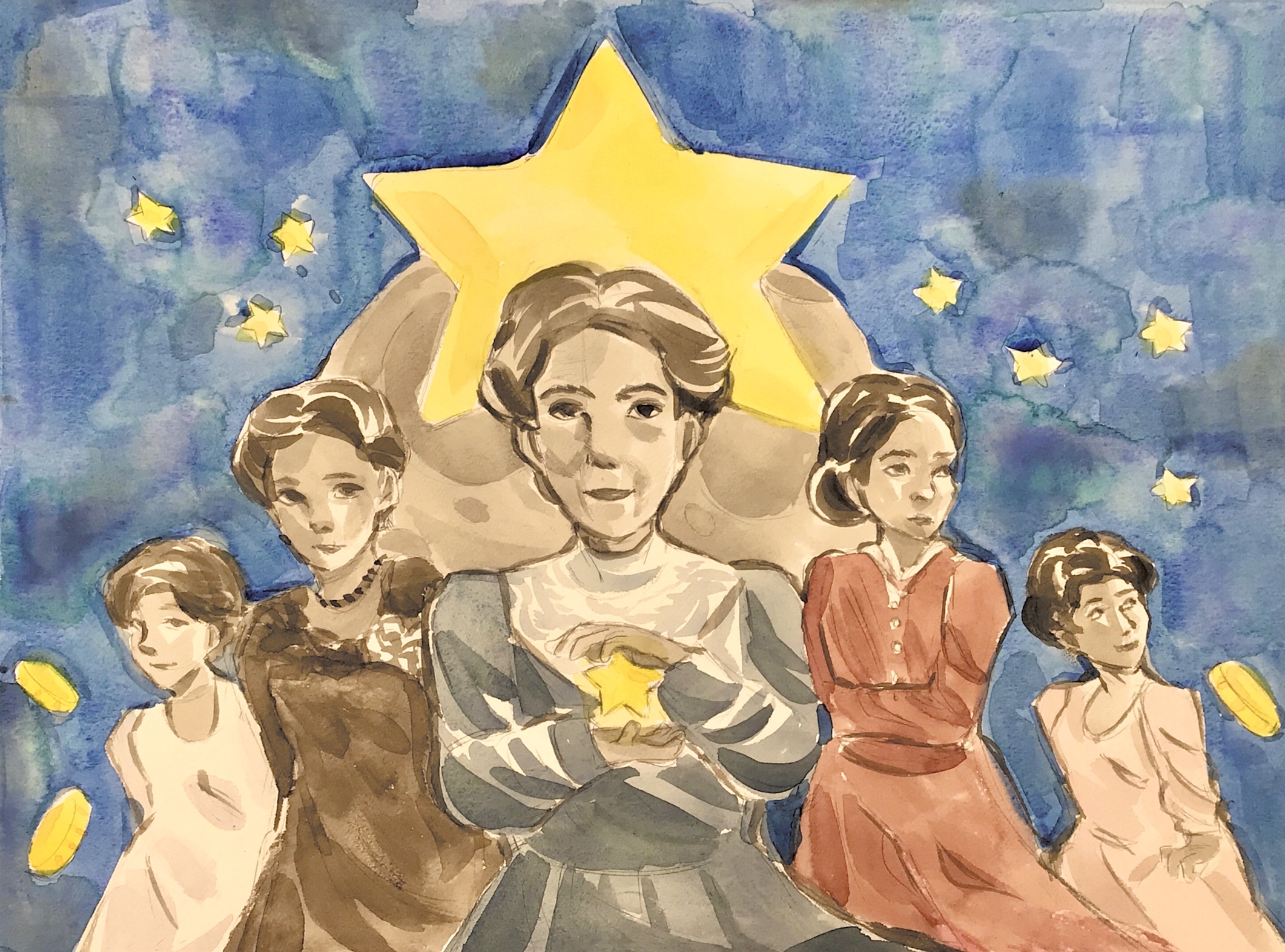
The Harvard Computers- Henrietta Swan Leavitt

My entry depicts a group of women known as the “Harvard Computers” who worked at the Harvard Observatory for a man named Edward Charles Pickering. In 1877, Pickering became the director of the Harvard Observatory during a time of great technological advancement, increasing the prevalence of photography, and subsequently the astrological data available to interpret. Pickering, in what appeared to be a progressive maneuver, employed his female staff to work examine, catalogue, and observe the data presented, however, the decision loses appeal when you take into account the workload of these women, their 25 to 50 cent wages, and their capacity to achieve greatness. Despite this, the women made significant contributions to the field of astronomy, especially Henrietta Swan Leavitt (pictured in the front) who discovered the period-luminosity relationship for Cepheid variables, a contribution that helped shape future astronomical discoveries. Henrietta and the many other talented “computers” performed incredibly important work, however, they received little to no recognition for their contributions.